

JAGR 2025 Annual Conference on Geopolitics and International Affairs
19-21 September at Ryukoku University, Kyoto, Japan

In September 2025, we returned to Ryukoku University in Kyoto, a venue that has graciously hosted our events several times in the past. The theme was ‘Rethinking the Global Order’, a call for analysis and new perspectives on the deep shifts occurring in the international balance of power, along with the various threats and opportunities that can arise during such periods of crisis.
Our initial intention this year had been to host an event for the first time in Vietnam. However, unfortunate complications in the lengthy process of attaining government approval for events with even tangential links to security issues forced us to relocate to Japan. In doing so, we had to reduce the size of the event, but in the end, seventeen of our original thirty presenters were able to join us.
On the first evening (Friday), several participants met for a quiet drink and some informal conversation in the center of Kyoto. The weather in mid-September was still a balmy 28°C, perfect for sitting at one of the sidewalk tables and enjoying a cold beer. Several attendees already knew one another from past events, but there were also new faces, and it was a great opportunity to make connections before the formal proceedings began.
The presentations started early the next day (Saturday), with discussions covering the impact of AI on international affairs, China’s use of smartphone partnerships as an economic gateway to Southeast Asia, the unstable nature of Myanmar’s post-independence political development, and the security implications of threats to internet connectivity in the Baltic and Scandinavian states.

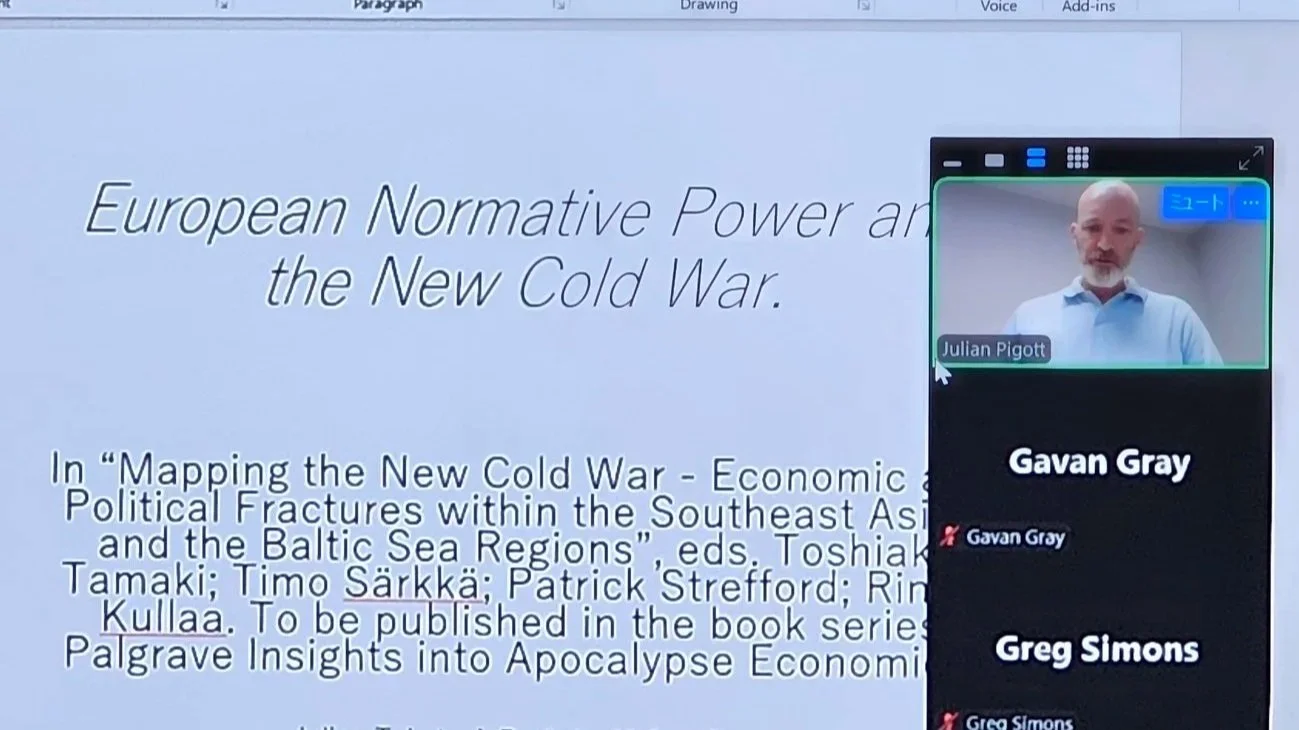


Each presentation was followed by a ten-minute Q&A, but over the two days, discussions invariably stretched beyond the allotted time, frequently causing the schedule to run over. The event is, however, quite informal, and timings are adjusted on the fly to accommodate presenters' comfort and to allow for as much time as needed to explore the questions raised.
Lunch on the first day was taken at the university’s large cafeteria, where presenters were able to break into small groups for more informal discussion. Afterwards, we returned for presentations on how Southeast Asia is becoming a higher priority for both the EU and Japan, the use of normative violations as a tactic in U.S. diplomacy, the role of normative superiority as a narrative foundation in Western policy-making, and the changes taking place in Central Asia, Eastern Europe, and the South Caucasus.
A brief tea break was followed by the final session, which examined the impact of U.S.-China economic rivalry on security partnerships in the East China Sea, and the growing significance of cognitive warfare as an extension of propaganda in international security.

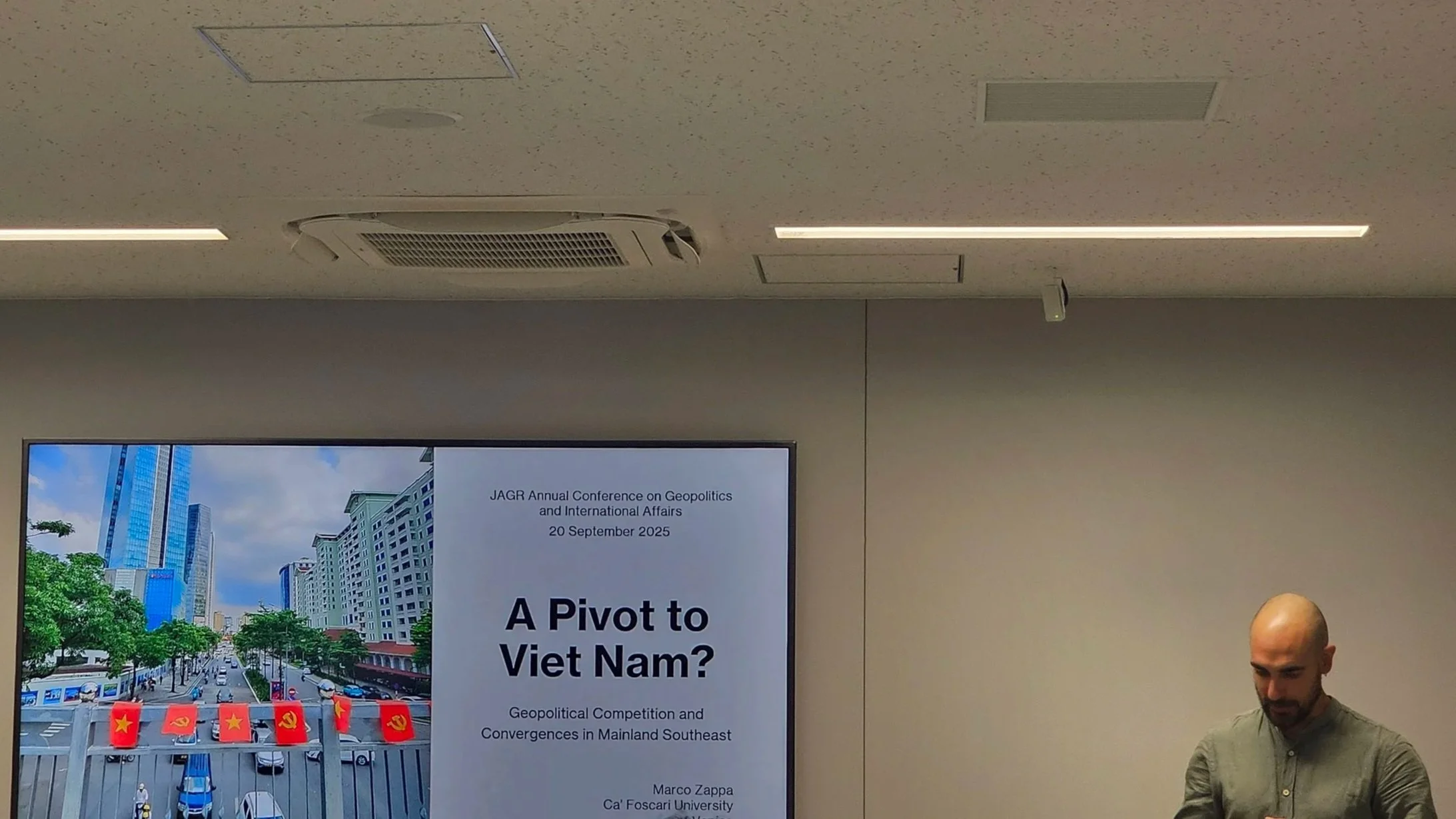
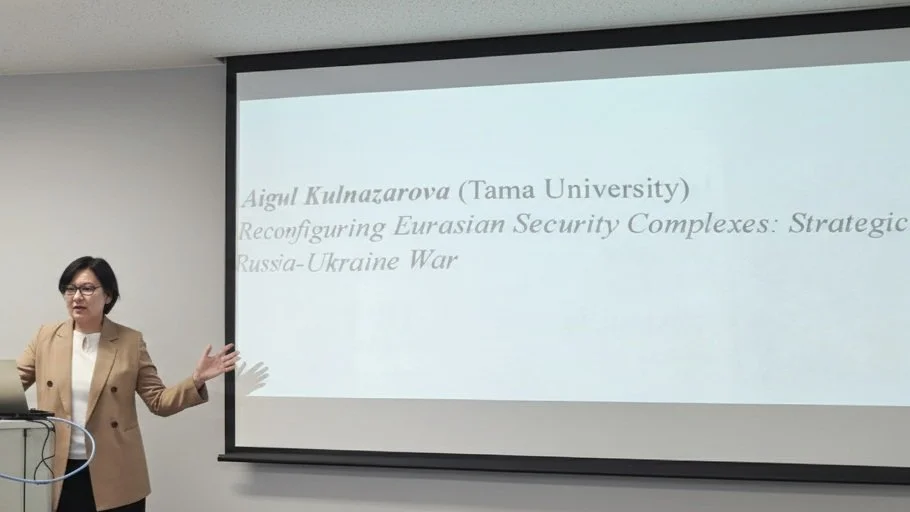


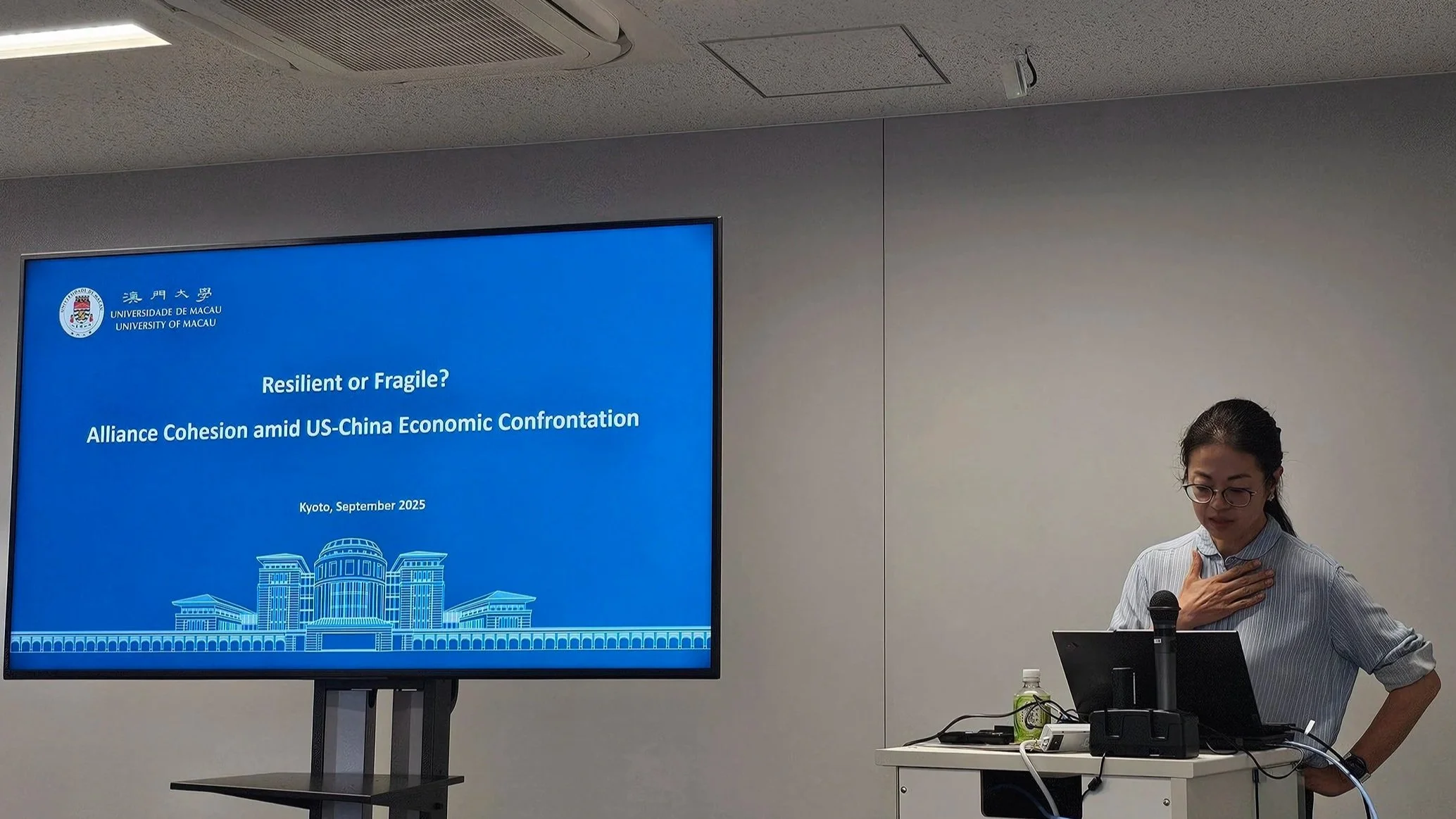


On Saturday evening, participants attended the conference dinner at the traditional Japanese restaurant Ganko: Takasegawa Nijo-en. A staple of our visits to Kyoto, the elegant building sits on the edge of the Kamogawa River and is surrounded by a beautiful garden. The food was, predictably, delicious, a series of courses of artfully crafted Japanese dishes accompanied by several hours of delightful conversation.
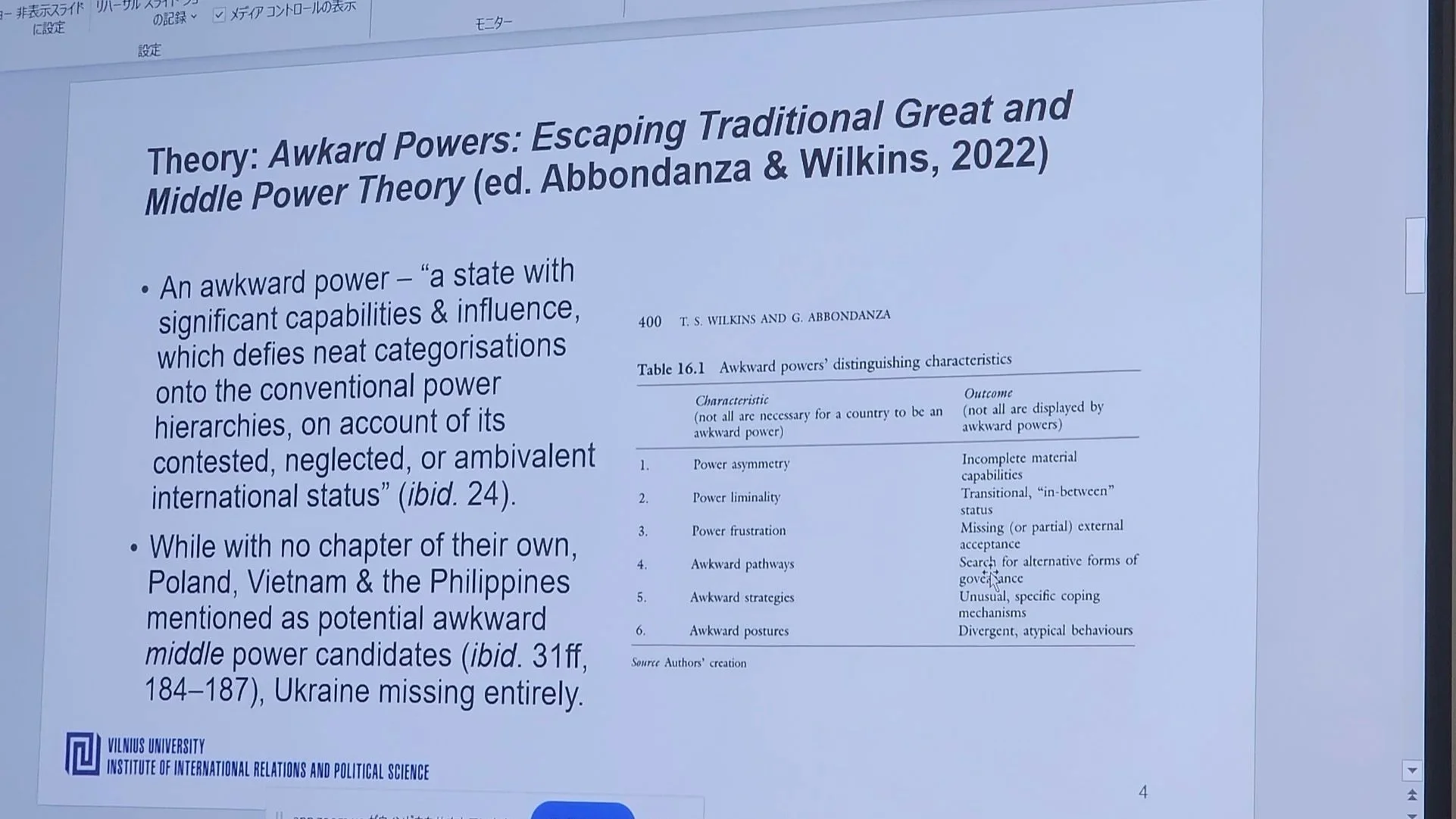
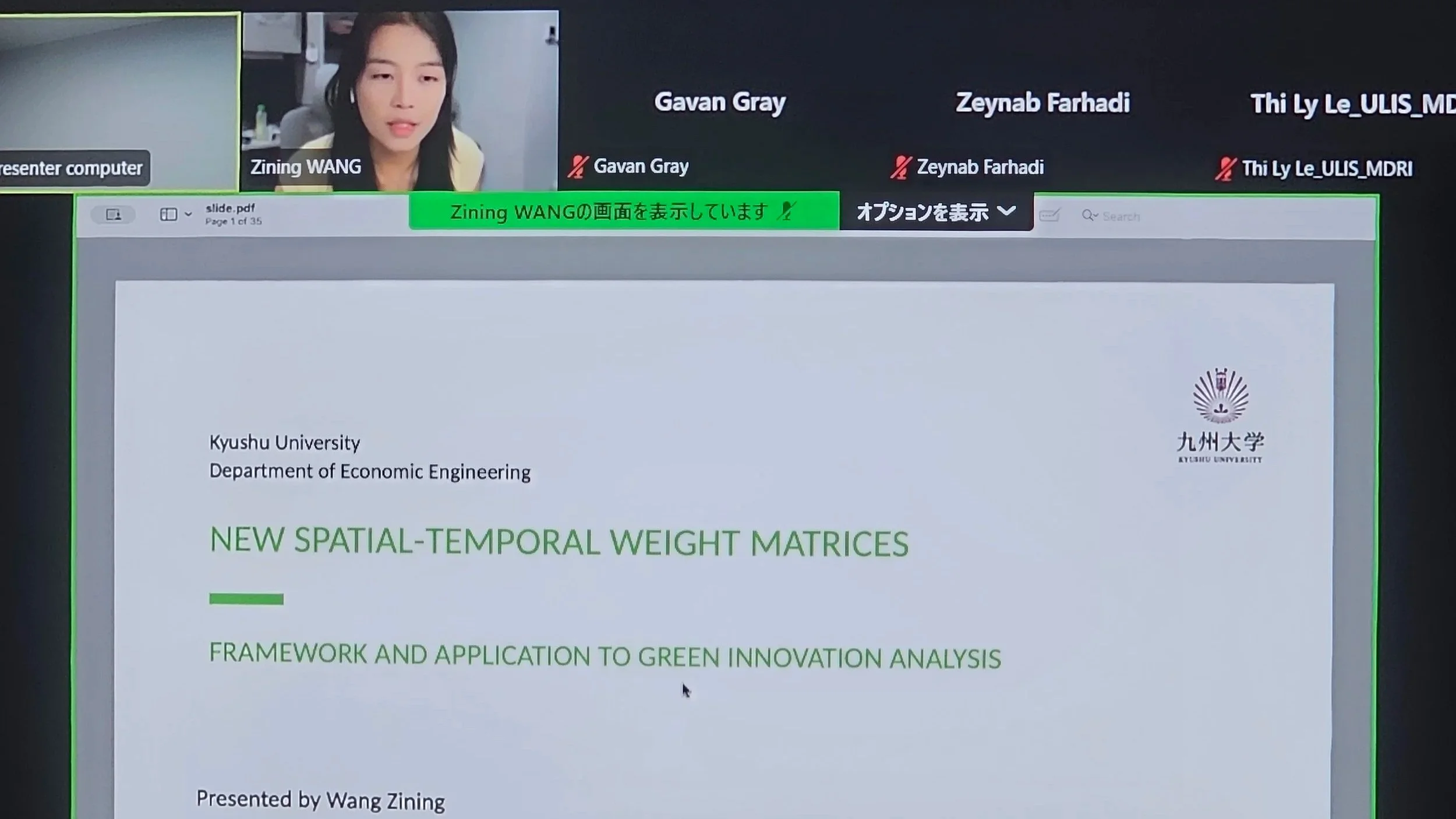
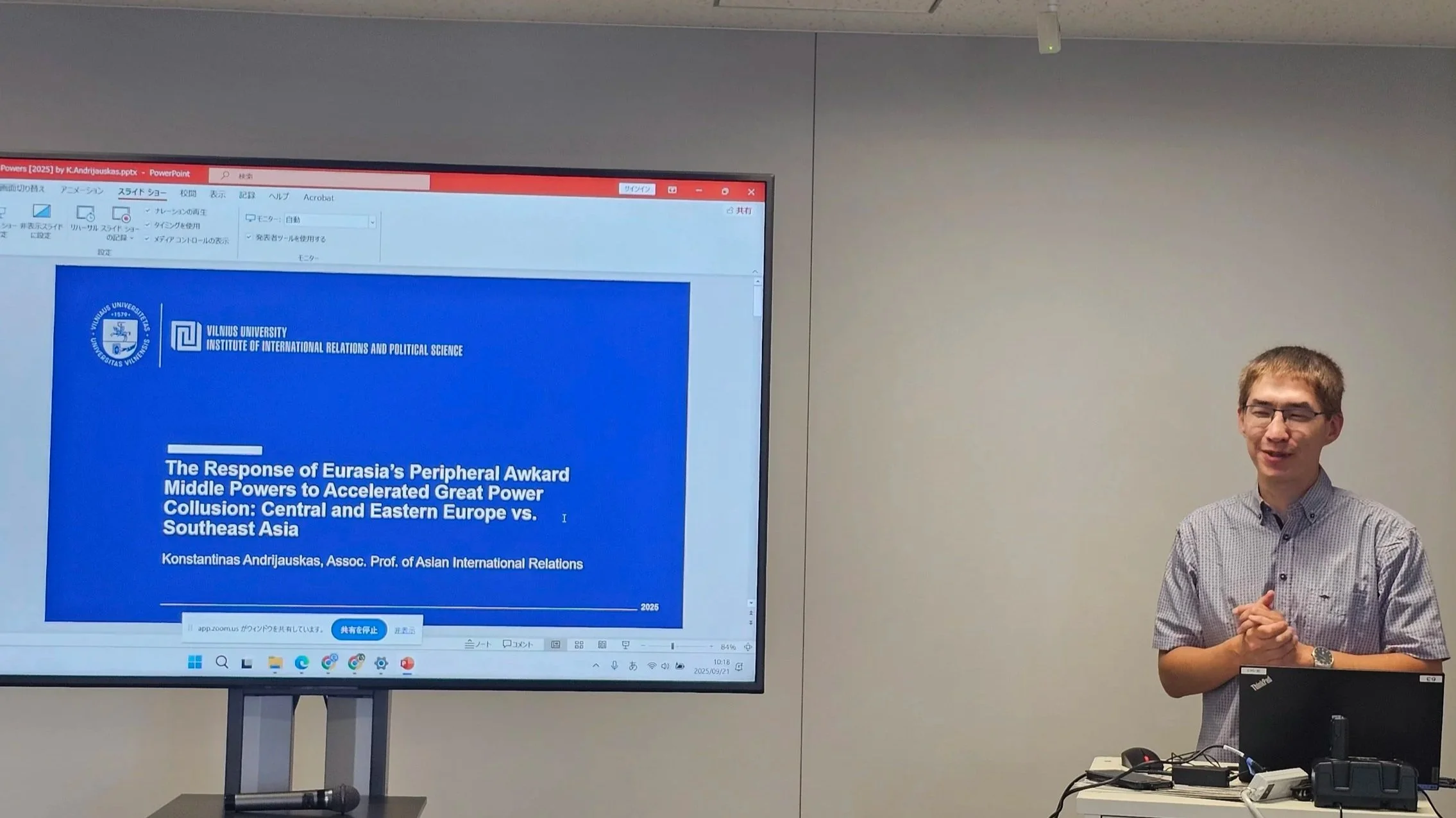
The final day (Sunday) began with discussions on how middle powers are seeing opportunities to rise amid recent tensions, the role of green industry in reducing transnational air pollution, and how conflict in the Middle East exerts a ripple effect on East Asian security dynamics.
The lunch break on the second day made use of a local shop run by an elderly married couple who provide a surprisingly broad variety of hearty Japanese lunch dishes. Afterwards, we returned for talks that included a case study on academic diplomacy in the Caucasus, the use of educational exchanges as another form of academic diplomacy, and, finally, an examination of Great Power competition for strategic alliances with Bangladesh.
The day closed with a final discussion on our past and future activities. The organization is still quite new, and we had the misfortune of starting to hold events at the outbreak of the COVID-19 pandemic, which, obviously, made any sort of gathering incredibly difficult. From the beginning, we have aimed for the events to be small-scale, informal, and personal.


As mentioned above, this year, our initial program for Vietnam had thirty presenters, and while that number was reduced due to the change of location, we don’t intend to go much above this number in future. With limits on the number of presentations, priority will be given to those who present in person and to topics that are accessible and likely to stimulate active and engaged discussion.
The full presentation abstracts can be found in the Conference Programme.
At present, we are planning two events for 2026 and 2027. The first will be a repeat of our conference in Kyoto, Japan (September 2026), and we hope to hold the next in Phnom Penh, Cambodia (March 2027). A Call for Papers for the first event will be released shortly.